
Controlled Vs. Uncontrolled Demolition: What’s The Difference And When To Use Each?
- Construction
-
 Admin: Lorat
- Comment
- 10 Jul, 2025
Controlled Vs. Uncontrolled Demolition: What’s The Difference And When To Use Each?
Demolition is a crucial part of the construction and redevelopment process. Whether you're clearing space for a new project, removing hazardous structures, or dismantling outdated buildings, the method you choose can significantly impact the safety, cost, and success of the project.
At GELEVATE Construction Engineering Pvt. Ltd., we specialize in both controlled and uncontrolled demolition, offering turnkey solutions tailored to the nature and complexity of each site. But what exactly sets these two approaches apart—and when should each be used?
Understanding Controlled Demolition
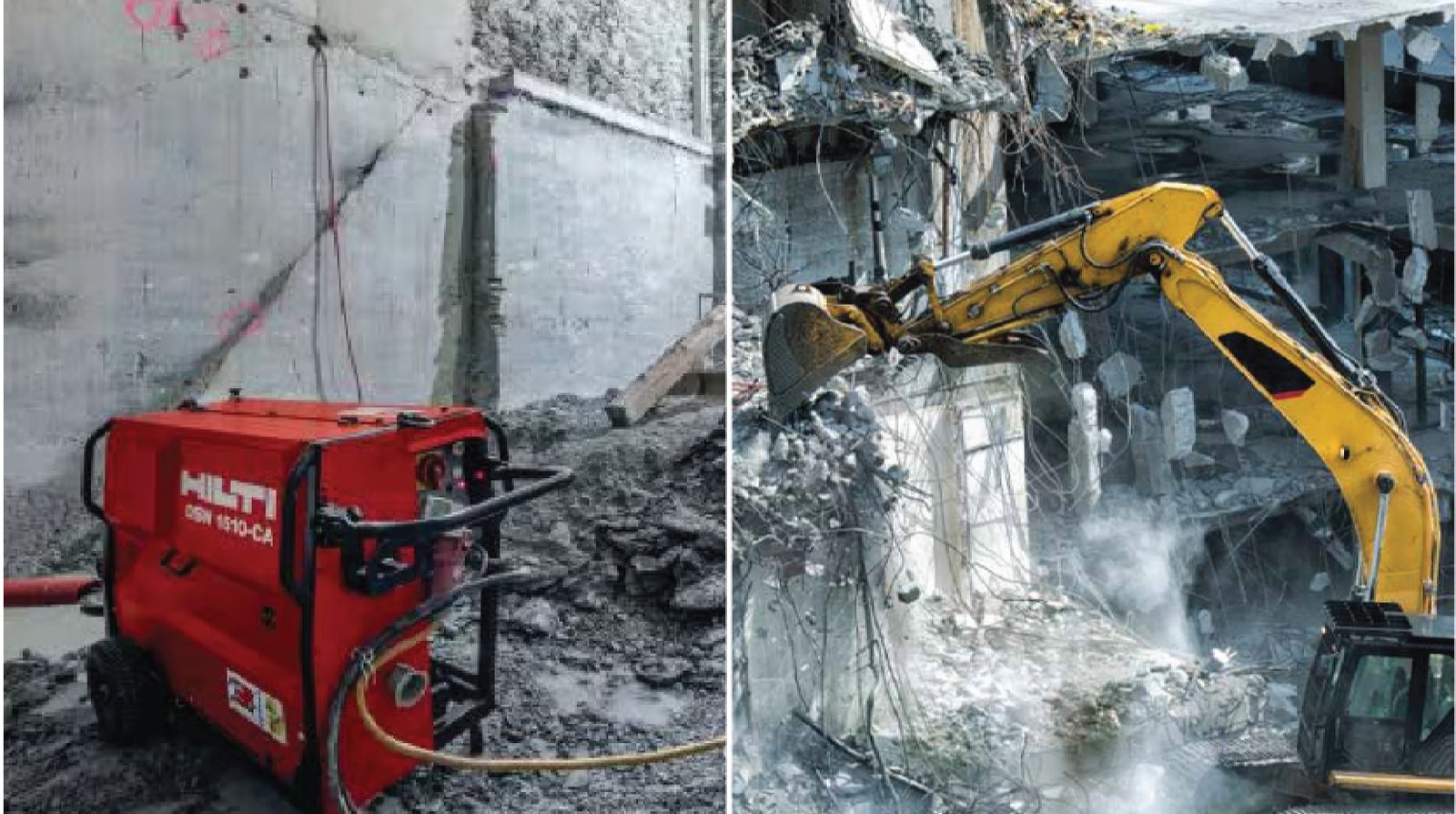
Controlled demolition is a precise and highly planned process where specific sections of a structure are safely dismantled using techniques like wire sawing, hydraulic crushers, diamond cutting tools, or even explosives (in rare, highly regulated cases).
This method is ideal for:
- Structures located in densely populated or sensitive areas
- Partial demolition where only a section of a building is removed
- Projects where surrounding buildings must remain unaffected
High-risk or structurally unstable buildings
Controlled demolition ensures minimal vibration, reduced dust, and maximum safety. At GELEVATE, our expert team uses advanced machinery and techniques to guarantee accuracy and prevent any unintended damage.
Understanding Uncontrolled Demolition
Uncontrolled demolition refers to mechanical takedown using excavators, breakers, or bulldozers without precision methods like wire-cutting or section planning. It is typically used when safety zones are wider and there is little concern about nearby structures.
This method is suitable for:
- Open spaces with ample working area
- Complete teardown of old, isolated structures
- Fast-track projects requiring bulk removal
- Situations where cost-efficiency is a priority
Although faster and more economical, uncontrolled demolition requires careful risk assessment and proper site management to ensure safety.
| Feature | Controlled Demolition | Uncontrolled Demolition |
|---|---|---|
| Precision | High | Moderate to Low |
| Planning Required | Extensive | Moderate |
| Safety for Nearby Sites | High | Moderate |
| Execution Speed | Moderate | Fast |
| Application | Complex or crowded environments | Open and low-risk environments |
When to Use Which?
Choose controlled demolition when the structure is:
- Close to other occupied buildings
- Structurally sensitive or partially reusable
- In need of debris control and safety assurance
Opt for uncontrolled demolition when:
- The building is isolated and fully vacant
- Speed and cost-effectiveness are key
- There’s no risk to adjacent infrastructure
At GELEVATE, we assess each project site thoroughly before recommending the ideal demolition approach. Our priority is always safety, efficiency, and compliance with local regulations.
Conclusion
Demolition is not a one-size-fits-all task. Controlled and uncontrolled demolition methods both have their place, depending on the nature of the structure, the site conditions, and the end goal. Choosing the right method ensures a smooth, safe, and cost-effective transition to the next phase of your construction project.
If you’re planning a demolition and aren’t sure where to start, let our experts at GELEVATE Construction Engineering Pvt. Ltd. help you make the right decision. With our turnkey demolition solutions, your project is in safe hands—from planning to cleanup.
Ready to demolish the right way?
Contact us today for a site assessment or project consultation.

Comments (6)
September 05, 2026 at 07:29 PM
July 07, 2026 at 11:39 AM
Aadinath July 05, 2026 at 02:59 PM
This post is extremely radiant. I extremely like this post. It is outstanding amongst other posts that I’ve read in quite a while. Much obliged for this better than average post. I truly value it! <a rel="dofollow"href=" https://nvlnconstructions.com/"> rehabilitation and retrofitting</a>
Aadinath July 05, 2026 at 02:58 PM
This post is extremely radiant. I extremely like this post. It is outstanding amongst other posts that I’ve read in quite a while. Much obliged for this better than average post. I truly value it! <a rel="dofollow"href=" https://nvlnconstructions.com/"> rehabilitation and retrofitting</a>
June 22, 2026 at 07:22 PM
May 20, 2026 at 06:02 AM